

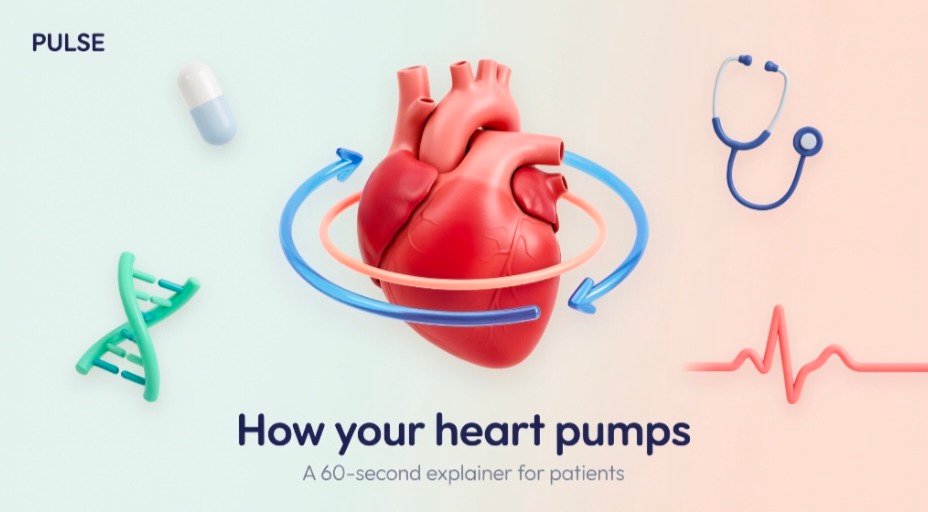

Alt text: An example of medical animation.
Medical information can be hard to explain because so much of it happens where people cannot see it.
A patient may need to understand what happens during a procedure. A doctor may need to explain how a device works inside the body. A pharmaceutical team may need to show how a treatment affects cells, tissue, or a specific biological pathway.
Words alone rarely do enough.
Medical animation gives healthcare brands a way to turn complex science into clear visual stories. It can show anatomy, movement, treatment steps, product function, and biological reactions in a format people can follow without feeling overwhelmed.
For hospitals, medical device companies, health tech brands, and training teams, that kind of clarity can improve communication at every stage.
Medical Topics Often Need a Visual Layer
Healthcare is full of processes that are difficult to picture.
Blood flow, nerve activity, surgical placement, tissue repair, drug delivery, and device movement all involve details that are hard to describe in plain language. Even accurate diagrams can feel limited because they do not show motion.
Animation solves that problem by showing change over time.
A video can show how a condition develops, how a treatment works, or how a device supports a procedure. The viewer does not have to imagine the sequence. They can see it unfold.
This makes the explanation easier for patients, clinicians, buyers, students, and investors.
Animation Helps Patients Feel More Informed
Patients often feel anxious when they do not understand what is happening. Medical terms can sound intimidating, especially during conversations about surgery, diagnosis, or treatment.
A short animated video can make the topic easier to absorb.
It can explain the condition first, then show the treatment, then walk through what the patient may expect. That structure helps people understand the basics before speaking with a healthcare professional or reviewing more detailed information.
Healthcare brands often use 3D medical animation services to create patient-facing visuals that explain procedures and devices in a calm, accurate, and easy-to-follow way.
The goal is not to replace medical advice. It is to support better understanding.
Medical Device Companies Can Explain Products Faster
Medical devices often carry their value in details that are not visible from the outside.
A device may include a hidden mechanism, sensor, delivery path, material layer, or movement pattern that matters during use. A standard product photo may show the design, but it does not explain the function.
Animation can reveal those details clearly.
A device can be shown from the outside, then opened visually to reveal internal parts. It can be placed in a simplified anatomical setting. It can show how it moves, where it is positioned, or how it supports a clinical workflow.
This helps sales teams, clinicians, hospital buyers, and product trainers understand the device without needing a long technical explanation.
Training Becomes Easier to Follow
Medical training depends on sequence and accuracy.
A learner may need to understand how to use a product, prepare a device, perform a step, or follow a safety process. Written instructions are useful, but they can be harder to remember when timing or movement matters.
Animation breaks the process into clear steps.
A trainee can watch the procedure, pause it, replay a difficult section, and review it later. This is useful for healthcare staff, medical students, product users, and sales representatives.
Training animation should stay practical. The visuals need to show the right steps clearly, not distract the learner with unnecessary effects.
Pharmaceutical Concepts Become Less Abstract
Pharmaceutical communication often involves microscopic activity. A treatment may target a receptor, block a pathway, reduce inflammation, or support a biological response.
These ideas are not easy to explain with text alone.
Animation gives them a visible form.
A video can show a drug entering the bloodstream, moving toward a target area, interacting with cells, and creating a specific response. It can also show disease progression and how treatment changes that process.
This helps healthcare professionals, investors, educators, and patients understand the science with less confusion.
Accuracy Matters More Than Drama
Medical animation needs to be handled carefully.
The visuals should be clear, but they should not exaggerate. Anatomy should be represented responsibly. Product movement should match real use. Claims should stay within what the product or treatment can support.
Healthcare audiences notice when something feels careless.
A clean animation with accurate visuals builds more trust than a dramatic video full of distracting effects. The best medical animations feel calm, precise, and useful.
They do not try to make science look magical. They make it understandable.
Animation Supports Healthcare Marketing
Healthcare marketing works best when it feels helpful, not pushy.
People are careful with medical decisions. They want information they can understand and trust. Animation helps brands explain value without sounding too sales-focused.
A clinic can use animation to explain a treatment path. A medical device company can show how a product works. A health tech brand can explain how its platform supports care teams. A pharmaceutical company can show how a therapy works at a biological level.
When used well, 3D animation services can help healthcare brands create visual content that feels polished, clear, and useful across websites, presentations, sales meetings, and events.
The Best Medical Videos Stay Focused
A common mistake is trying to explain everything in one video.
Medical topics can get detailed fast. If a video includes every feature, every clinical detail, every use case, and every audience concern, the viewer gets lost.
A better approach is to choose one clear goal.
The video may educate patients. It may explain a device. It may support sales. It may train users. It may introduce a treatment.
Once the goal is clear, every scene should support it.
If a detail does not help the viewer understand the main point, it belongs in a technical guide, sales deck, training module, or follow-up resource.
Animation Works Across Many Healthcare Channels
One strong medical animation can support several uses.
It can appear on a website, product page, training portal, sales presentation, conference screen, patient education page, webinar, or investor deck. Shorter clips can be created for social media, email campaigns, or event displays.
This makes animation useful beyond one campaign.
It gives healthcare teams a repeatable way to explain complex ideas with consistency. That matters when the same topic needs to be understood by different audiences.
Conclusion
Medical animation helps healthcare brands explain complex ideas with more clarity and confidence. It can show procedures, device functions, biological processes, pharmaceutical activity, and patient education topics in a way that feels easier to understand. The best medical animations are accurate, focused, and built around the viewer’s real questions. When medical information is difficult to picture, animation gives people a clearer path to understanding.
Frequently Asked Questions
What Is Medical Animation?
Medical animation is a visual video format used to explain anatomy, treatments, procedures, devices, or biological processes through motion.
Why Is Animation Useful in Healthcare?
Animation helps healthcare teams explain complex medical topics by showing processes that are difficult to see or describe with words alone.
Can Medical Animation Help Patients?
Yes. Medical animation can help patients understand procedures, conditions, devices, and treatment steps in a simpler visual format.
Where Can Healthcare Brands Use Medical Animation?
Medical animation can be used on websites, patient education pages, training platforms, sales decks, product pages, webinars, and conference displays.
How Long Should a Medical Animation Be?
Most medical animations work best between 60 and 120 seconds, depending on the audience, topic, and amount of detail needed.