


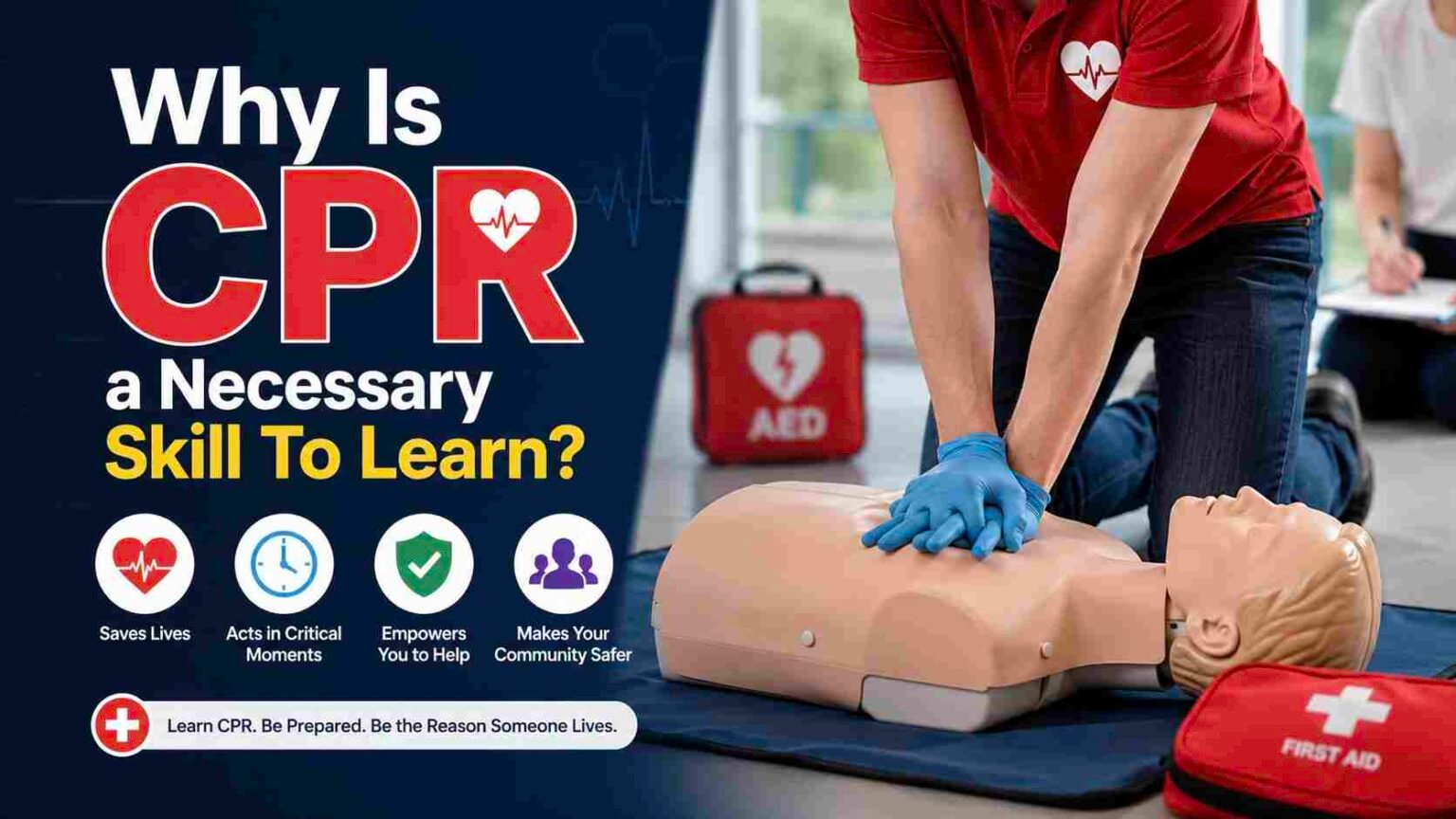

Emergency response training offers certification options tailored to different participant groups and learning needs. Healthcare providers, workplace personnel, and community members can access courses designed to address their specific responsibilities and training requirements. Initial certification courses provide foundational skills for new learners, while renewal courses help individuals maintain current credentials and stay up to date with recommended practices. Here is why CPR is a necessary skill to learn:
Prepare for Cardiac Emergencies
Cardiac emergencies require training that prepares responders to act in both healthcare and community settings. Basic Life Support (BLS) instruction covers the recognition and initial management of cardiac arrest in in-hospital and out-of-hospital environments. The course teaches:
- Recognition of cardiac arrest
- CPR for adults, children, and infants
- Automated External Defibrillator (AED) use
- Relief of foreign-body airway obstruction
- The American Heart Association Chain of Survival
These skills provide a structured approach for responding to cardiac emergencies before advanced care is available. Healthcare providers may complete Basic Life Support (BLS), Advanced Cardiovascular Life Support (ACLS), or Pediatric Advanced Life Support (PALS) through initial or renewal certification courses. Initial courses provide the required training for new certifications; renewal courses help maintain their credentials. Single-discipline and combination course options allow professionals to choose training that aligns with their role and certification requirements.
Respond Before Help Arrives
Immediate action during a cardiac emergency depends on skills learned before professional responders arrive. Heartsaver courses provide CPR and first aid training for non-healthcare providers who may need to respond in an emergency. These courses prepare participants to provide initial care until emergency medical services take over. Participants are able to choose the appropriate course by reviewing course descriptions and selecting the training that matches their needs.
Build Practical Life-Saving Skills
Emergency response certification combines educational content with practical skills assessment to verify participant readiness. Some programs use a blended learning format, allowing participants to complete online coursework before attending an in-person skills session. The online portion introduces key concepts and procedures, while the skills session focuses on applying those concepts in a hands-on setting.
During an in-person evaluation, participants demonstrate required techniques under instructor guidance to complete the certification requirements. This format allows training programs to assess both knowledge and performance rather than relying on coursework completion alone. By combining independent learning with direct skills practice, certification provides a structured process for measuring participant competency.
Support Different Emergency Needs
Certification options are designed for different participant groups, with each course aligned to the responsibilities and settings where skills may be applied. Healthcare providers complete programs that support clinical roles, while non-healthcare providers choose courses that match their emergency response needs. This approach allows participants to select training based on their role rather than using a single certification pathway for all audiences. Training options are also available for workplaces and home environments, where participants may have different preparation goals.
Register for CPR Training
Choosing the right emergency response training starts with selecting a certification that fits your role and training needs. Flexible scheduling, multiple locations, workplace programs, and in-home group sessions provide options for different participants. Course descriptions outline the requirements before registration, helping participants choose the program that best fits their goals. Contact a training provider today to select a certification that matches your needs.