



Sprinkles are one of the fastest ways to make a plain dessert look finished. A quick shake of color can turn a basic cupcake into something that feels like a small celebration.
Jimmies are the soft, rod-shaped sprinkles often found on ice cream, cupcakes and birthday cakes. The name varies by region, and its exact origin is uncertain, though it appeared in use by 1930.
This guide explains what jimmies are, how they differ from other sprinkles, when to use them and how to store and choose them with more confidence.
At a glance: the sprinkle families you will see
Most sprinkle types fall into a handful of groups. Here is a quick reference for what each one does best.
- Jimmies: soft rod-shaped pieces, good for ice cream, cupcakes, cookies and funfetti-style bakes.
- Nonpareils: tiny round sugar balls with a crunchy texture, best used as a topping.
- Quins: flat shapes such as stars or hearts, useful for themed treats.
- Pearls: hard beads that add a finished look when used sparingly.
- Sanding and coarse sugar: add sparkle and a little crunch, often used on rims or cookie tops.
- Dragees: some are sold as decorations only and can be too hard to eat, so check the label.
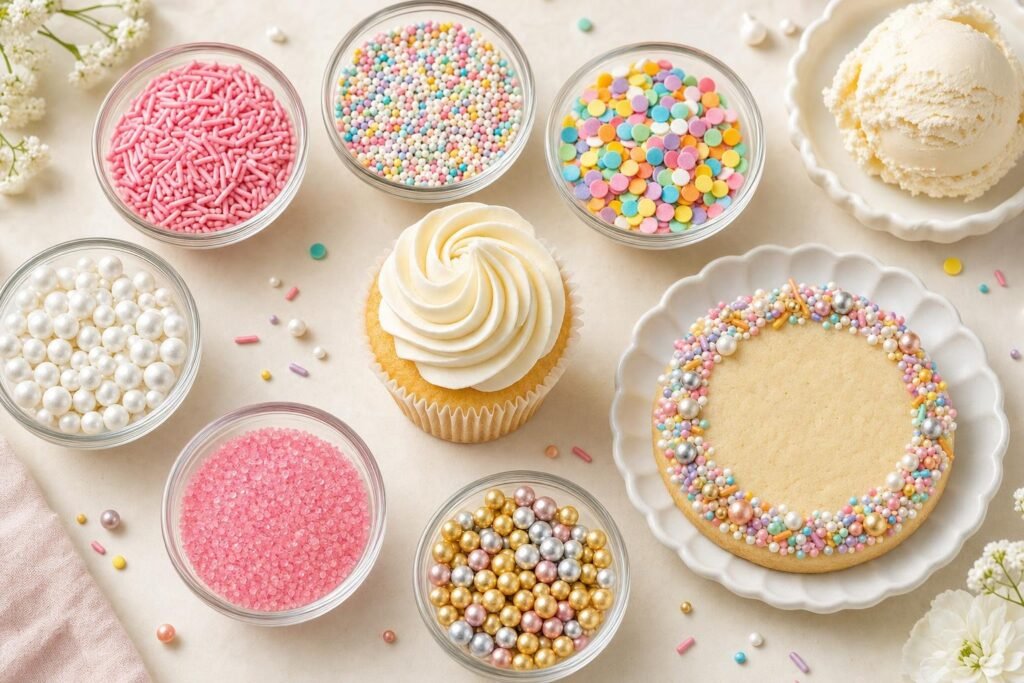
If you want broader plating and finishing inspiration, a general food guide can help you think about contrast, color and crunch.
Types of sprinkles: what jimmies are and when to use them
Jimmies are rod-shaped candy sprinkles used on cakes, cupcakes, cookies, donuts and ice cream. They also work well baked into funfetti-style cakes because they are softer and less brittle than many other sprinkle shapes.
Compared with nonpareils, jimmies are softer and less likely to scatter. Nonpareils are crunchier and are usually best added after baking. Quins are flat and decorative, so they suit themed designs more than an even, all-over coating.
One naming note is worth remembering: in New England, jimmies often refer specifically to chocolate sprinkles. If a recipe uses the term, it helps to confirm what the writer means.
When you compare colors and bulk sizes, jimmies candy sprinkles usually refer to classic rod-shaped sprinkles, not every sprinkle shape.
When to use jimmies versus other types
For bake-in funfetti, jimmies are usually the better choice. Nonpareils are best added after baking because their color can bleed into batter.
For delicate cookies or royal-iced designs, nonpareils or sanding sugar tend to look cleaner. They sit lightly on the surface without overwhelming fine details.
For more formal cakes, pearls used sparingly can add a quiet finish. Keep in mind that some dragees are sold as decoration only and can be very hard, so always review the label before serving.
Hands-on decorating ideas with jimmies
Cupcakes: swirl your frosting, then dip or roll the rim in jimmies and add a focal topper in the center.
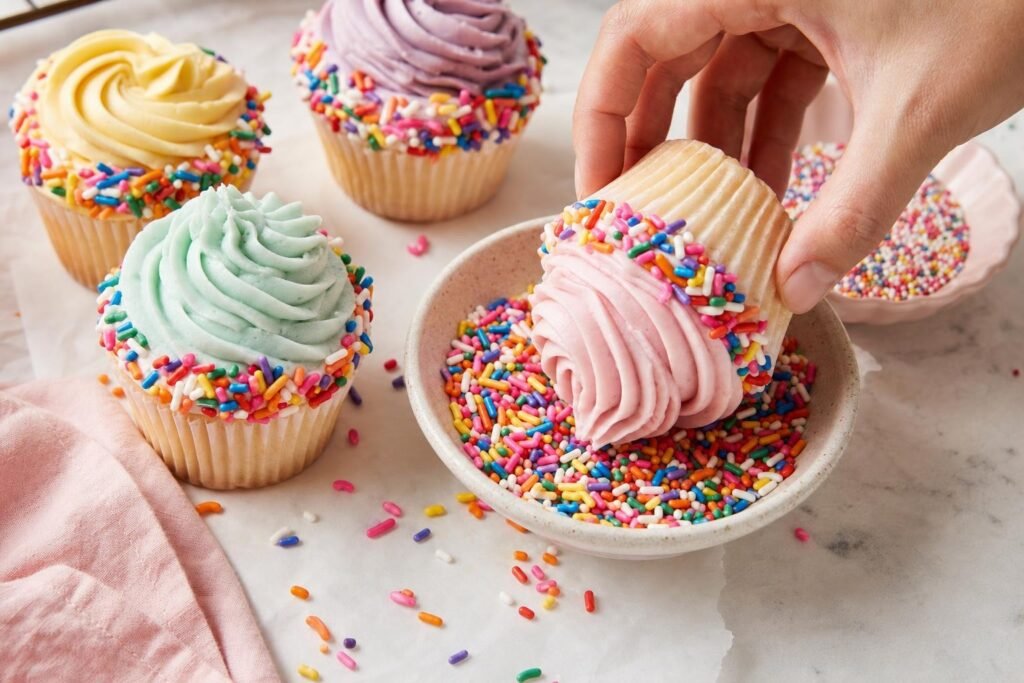
Ice cream and milkshakes: cascade jimmies over a scoop, or coat the rim of a glass for a playful finish.
Cookies: roll the dough edges in jimmies before baking for a speckled look, or press them into fresh glaze.
Make sprinkles stick and avoid color bleed
Timing matters more than technique. Apply sprinkles to frosting while it is still tacky and press gently so they hold.
If the icing has already set, a light swipe of corn syrup or buttercream where you want sprinkles can help them adhere.
Chilling a decorated item briefly can limit smudging. If you want crisp colors, avoid very wet frostings that can cause the dye to run.
Storage and shelf life
Keep sprinkles in an airtight container in a cool, dry place. Many are freshest when used within about two to three years, but labels can vary by brand.
Watch for clumping, fading color or stale odors, which are signs they may be past their best. Labeling each container with the date you opened makes this easier to track.
Ingredients, allergens, and dietary notes
Sprinkle mixes vary widely in what they contain. Some include confectioner’s glaze, which is often shellac-based, while others may use different additives.
For example, some Foliay product listings include confectioner’s glaze and soy lecithin among the ingredients. That is a useful reminder to read the label rather than assume every sprinkle mix is the same.
If you are baking for someone with allergies, look for soy content, color additives and shared-equipment warnings on the package. When in doubt, check the label first.
What is new with colors
Color rules can change, so it helps to read ingredient lists when choosing bright shades. The FDA revoked authorization for FD&C Red No. 3 in foods and ingested drugs, with food products required to comply by January 15, 2027.
Frequently asked questions
Are jimmies and sprinkles the same thing?
Jimmies are one type of sprinkle. They are the soft rod-shaped pieces, while sprinkles is a broader term that also covers nonpareils, quins, pearls and more.
Do jimmies bleed in cake batter?
Jimmies are generally a better choice for bake-in funfetti than nonpareils, which can bleed color into batter. Jimmies tend to hold their shape and color better when baked.
Are sprinkles vegan?
Some are and some are not. Certain mixes include ingredients like confectioner’s glaze, so always check the specific product label rather than assuming.
How long do sprinkles last?
Many sprinkles are freshest within about two to three years when stored in an airtight container in a cool, dry place. Check the package for product-specific guidance.
Are dragees edible?
Some are, but certain dragees are sold as decoration only and can be too hard to eat. Check the label before serving.