
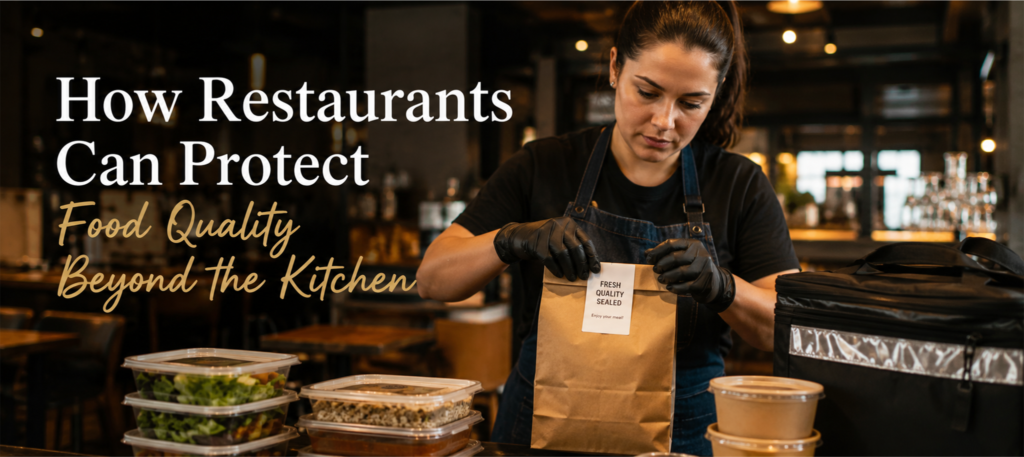
A restaurant’s responsibility for food quality does not end when a dish leaves the stove, oven, or preparation counter. For dine-in orders, servers carry meals only a short distance before placing them in front of customers. Takeaway and delivery orders face a much more demanding journey.
During transportation, food is exposed to heat loss, trapped steam, movement, delayed handoffs, changing weather, and inconsistent handling. A meal that leaves the kitchen in excellent condition can arrive with a softened crust, separated sauce, shifted toppings, or an unappealing presentation.
Protecting quality beyond the kitchen requires restaurants to view preparation, packaging, dispatch, and delivery as one connected system. Every stage influences what the customer ultimately tastes.
Quality Should Be Designed for the Entire Journey
Many restaurants judge a dish at the pass, where it is hot, freshly plated, and ready to serve. Delivery meals should be evaluated differently.
The more useful question is not, “Does this look good now?” It is, “How will this look and taste after twenty or thirty minutes in transit?”
That shift in thinking changes how restaurants approach:
- Ingredient selection
- Cooking time
- Portion size
- Sauce placement
- Container choice
- Ventilation
- Dispatch timing
- Delivery instructions
A dish may be excellent for dine-in service but unsuitable for transportation without adjustments. Restaurants that test food under realistic delivery conditions are better equipped to protect consistency.
Build a Delivery-Friendly Menu
Not every dish travels equally well. Some foods remain stable for a reasonable period, while others deteriorate quickly.
Meals that usually travel more successfully include:
- Baked pasta
- Rice dishes
- Curries
- Roasted meats
- Thick soups
- Pizza
- Sturdy sandwiches
More delicate products may require additional planning. Fried foods lose crispness in humid containers, ice cream softens quickly, fresh salads wilt when placed near hot dishes, and thin sauces may leak or separate.
Restaurants do not necessarily need to remove delicate items from the menu. They can adapt them by changing preparation, separating components, or using more suitable containers.
Control Moisture Before Packing
Moisture is one of the main causes of disappointing takeaway food. Hot dishes continue producing steam after cooking, and that steam becomes trapped when food is packed too quickly in a fully sealed container.
As the air cools, water vapour condenses and returns to the food. This can make fried coatings soft, bread damp, and pizza bases chewy.
Restaurants can manage moisture by:
- Draining excess oil
- Allowing heavily steamed food to rest briefly
- Using vents where appropriate
- Separating wet and dry ingredients
- Avoiding overfilling containers
- Choosing packaging suitable for the product
The goal is not to remove all moisture. It is to prevent excess steam from damaging the textures customers expect.
Match Packaging to the Food
Packaging should be selected according to the behaviour of the meal rather than price or appearance alone.
Soup requires a leak-resistant container. Fried chicken benefits from ventilation. Salads need protection from heat. Tall desserts require structural support, while pizza needs a flat box that allows controlled airflow.
Restaurants using custom pizza boxes can select dimensions, board strength, ventilation features, and internal design based on the type of pizza they sell. Thin-crust, deep-pan, and heavily topped pizzas may not perform equally well in the same style of box.
A well-fitted box limits movement without pressing against the food. It also protects the product from stacking pressure and helps the kitchen present it neatly.
Keep Hot and Cold Items Separate
Placing hot and cold food in the same bag can reduce the quality of both.
Heat from the hot meal raises the temperature of cold desserts, salads, drinks, and sauces. At the same time, chilled items absorb heat from the main dish and may cause it to cool faster.
Restaurants should separate incompatible items wherever possible. This may involve:
- Using different bags
- Adding insulated partitions
- Packing cold drinks independently
- Keeping salads away from hot containers
- Dispatching frozen desserts at the final moment
Separation supports both eating quality and safer temperature control.
Protect Texture Through Component Separation
Many meals deteriorate because wet ingredients remain in contact with dry or crisp ingredients for too long.
A burger bun absorbs moisture from the patty, tomato, and sauce. Nachos soften beneath salsa or melted toppings. Fried food becomes soggy when placed beside gravy. Salad leaves wilt when dressing is added before a long journey.
Packing certain elements separately can preserve quality. Sauces, dips, dressings, garnishes, and crunchy toppings can be supplied in small containers for customers to add before eating.
This requires slightly more packaging, but it can significantly improve the final experience.
Review Cooking Methods for Delivery Orders
Restaurants sometimes use exactly the same preparation method for dine-in and delivery orders. That approach may not produce the best results.
Delivery items may benefit from small adjustments, such as:
- Baking a crust slightly longer
- Reducing excess sauce
- Roasting vegetables to remove water
- Resting grilled meat before packing
- Using a sturdier coating for fried products
- Choosing cheese that maintains texture as it cools
These adjustments should be carefully tested. Overcooking food in anticipation of delivery can create dryness, while under-saucing may make the meal feel incomplete.
The objective is to account for predictable changes without damaging the original recipe.
Reduce the Time Between Cooking and Collection
A meal can begin losing quality while it is still inside the restaurant. If completed orders remain on a counter waiting for a driver, packaging improvements alone may not solve the problem.
Kitchens should coordinate preparation with expected pickup times. This requires clear communication between:
- Front-of-house staff
- Kitchen teams
- Delivery platforms
- In-house drivers
- Customers collecting orders
Restaurants can also use designated pickup areas that keep hot food warm without exposing it to excessive humidity.
Orders should not be completed too early, but drivers should not be left waiting so long that delivery schedules become inefficient.
Use Clear Labelling Systems
Labels help staff and drivers handle orders correctly. They can indicate:
- Customer name
- Order number
- Hot or cold status
- Allergy information
- Storage instructions
- Box orientation
- Delivery priority
- Contents of each package
Labels can also help customers identify sauces, sides, and reheating instructions.
Clear labelling reduces unnecessary opening of containers and lowers the risk of missing items or mixing orders.
Make Branding Functional
Packaging is an important branding surface, but it should do more than display a restaurant’s name.
Businesses can use custom boxes with logo to create a consistent identity across takeaway orders while also communicating useful information. Packaging can include contact details, social media handles, reheating guidance, recycling instructions, or a short message encouraging feedback.
A recognisable logo helps customers connect the meal with the restaurant, especially when food is shared in offices, homes, or social settings.
However, visual design should never interfere with packaging performance. Strong branding is most effective when the box also protects food, remains easy to carry, and arrives in good condition.
Train Staff in Packaging Procedures
Even high-quality packaging can fail when used incorrectly.
Staff should know:
- Which container belongs to each dish
- How much food each package can hold
- When vents should remain open
- How sauces should be sealed
- Which products should not be stacked
- How to arrange items inside bags
- Where labels should be applied
Standardised procedures make results more consistent, particularly during busy periods when staff may otherwise make rushed decisions.
Simple visual guides near the packing station can reduce errors and speed up order assembly.
Improve the Packing Station
The packing area should be organised with the same care as the cooking line.
A well-designed station may include:
- Containers grouped by size
- Labels and markers
- Sauce pots
- Tamper-evident seals
- Napkins and cutlery
- Order checklists
- Separate spaces for hot and cold food
The station should be clean, uncluttered, and close enough to the kitchen to reduce delays.
Restaurants should also avoid storing boxes where they can absorb moisture, grease, dust, or strong odours before use.
Prevent Movement During Transportation
Food quality depends partly on how securely it travels.
Sudden braking, sharp turns, uneven roads, and careless stacking can cause toppings to slide, containers to leak, and delicate products to collapse.
Restaurants can reduce movement by:
- Using correctly sized packaging
- Adding dividers or inserts
- Filling empty bag space appropriately
- Keeping pizzas horizontal
- Placing heavy items beneath lighter ones
- Using cup holders for drinks
- Avoiding excessive stacking
Drivers should also be trained to carry bags level and secure them inside the vehicle.
Use Tamper-Evident Packaging Carefully
Tamper-evident seals can reassure customers that food has remained closed since leaving the restaurant. They can also help identify whether a package was opened accidentally during transportation.
Seals should be applied in a way that:
- Does not block necessary vents
- Does not damage the box
- Remains visible
- Opens without spilling the contents
- Does not contaminate food-contact areas
Restaurants should treat tamper evidence as part of a broader quality system rather than a substitute for good handling.
Provide Reheating and Serving Instructions
Some meals naturally cool during delivery and may benefit from brief reheating. Clear instructions allow customers to restore texture and temperature more effectively.
Instructions may explain:
- Whether the product should be removed from the package
- Which heating method is recommended
- Approximate heating time
- Whether sauces should be added before or after reheating
- How leftovers should be stored
For pizza and fried food, an oven or air fryer may restore texture more effectively than a microwave. However, instructions should be appropriate to the product and packaging.
Restaurants should avoid making food safety claims unless they are supported by proper procedures and local guidance.
Monitor Third-Party Delivery Performance
Restaurants using delivery platforms may have limited control once an order leaves the premises, but they can still monitor performance.
Useful information includes:
- Average driver waiting time
- Average journey length
- Number of stacked orders
- Customer complaints by delivery area
- Damage rates
- Temperature-related feedback
- Frequency of missing items
Patterns can reveal whether certain dishes, distances, or time periods produce more problems.
Restaurants may then adjust delivery zones, menu availability, packaging, or preparation timing.
Gather Specific Customer Feedback
General questions such as “Did you enjoy your food?” provide limited insight. More focused feedback can identify operational weaknesses.
Restaurants might ask:
- Was the food warm when it arrived?
- Did the packaging remain secure?
- Was anything spilled or damaged?
- Did the crisp items retain their texture?
- Were the portions presented neatly?
- Were all sauces and sides included?
Repeated complaints about the same issue should trigger a review of the process rather than being treated as isolated incidents.
Conduct Delivery Simulations
One of the most effective ways to evaluate takeaway quality is to perform a test journey.
Prepare the meal as usual, pack it, place it in the delivery bag, and transport it for a realistic amount of time. After the journey, inspect and taste it as a customer would.
Evaluate:
- Food temperature
- Condensation
- Aroma
- Texture
- Leakage
- Product movement
- Box condition
- Visual presentation
Testing should include different journey lengths and weather conditions where possible.
A packaging system that performs well during a short winter delivery may not perform equally well during a long summer journey.
Treat the Delivery Handoff as a Quality Checkpoint
The final restaurant handoff is an opportunity to catch mistakes before they reach the customer.
Before releasing the order, staff should confirm:
- The order is complete.
- Containers are closed correctly.
- Labels match the customer.
- Drinks are secure.
- Hot and cold items are separated.
- The driver understands any handling requirements.
- The packaging is clean and undamaged.
A simple checklist can prevent many complaints related to missing items, spills, and incorrect orders.
Balance Sustainability With Performance
Restaurants are under growing pressure to reduce unnecessary packaging. This is important, but sustainability decisions should still protect food quality and safety.
Poorly performing packaging can increase waste if food arrives damaged and must be replaced. The most responsible option is often one that uses materials efficiently while protecting the meal effectively.
Restaurants can improve sustainability by:
- Choosing right-sized packaging
- Avoiding unnecessary layers
- Using recyclable materials where suitable
- Providing clear disposal instructions
- Testing alternatives before large orders
- Reducing food waste through better protection
Sustainability and performance should be evaluated together rather than treated as competing goals.
Create Accountability Across the Team
Food quality beyond the kitchen depends on more than one person.
Chefs control preparation. Packing staff select and close containers. Front-of-house employees coordinate pickup. Drivers manage transportation. Managers monitor complaints and improve procedures.
Each person should understand how their role affects the final meal.
When responsibility is unclear, problems are often blamed on delivery rather than investigated properly. A strong system assigns clear standards to every stage.
Final Thoughts
Restaurants protect food quality beyond the kitchen by treating delivery as an extension of food preparation. The journey affects temperature, moisture, texture, aroma, presentation, and customer confidence.
Strong results depend on coordinated decisions: choosing delivery-friendly recipes, using packaging suited to each meal, separating hot and cold items, managing steam, reducing waiting time, training staff, and monitoring transportation.
Branding and presentation also matter, but they should support rather than replace practical performance. A professionally designed box creates a positive first impression, while appropriate materials and construction ensure that the food inside arrives as intended.
When restaurants take responsibility for the complete journey, customers receive a more consistent experience and the quality created in the kitchen is far more likely to survive all the way to the table.
Conversation