
Buying yarn online can save you a trip and give you far more choice than a single local shelf. The challenge is comparing yarn labels, weights, dye lots and delivery terms.
In Australia, yarn is commonly described by ply, while many patterns use international weight names. Use this checklist to match yarn to your project, read a label with confidence and understand delivery before checkout.
Quick translation guide: ply and international weights
Australian yarn is often sold by ply, but ply is not a fixed measure of thickness. Fibres and spinning methods can make two yarns with the same ply behave differently. Check meterage per 100 g because it shows how much length you are buying.
As a rough guide, DK or light worsted weight usually corresponds to AU 8-ply, with typical needles around 3.75 to 4.5 mm. Meterage is still the better comparison point when you swap one yarn for another.
| AU ply | International weight | Typical needle |
|---|---|---|
| 4-ply | Fingering / Sock | 2.75 to 3.25 mm |
| 8-ply | DK / Light Worsted | 3.75 to 4.5 mm |
| 10-ply | Aran / Worsted | 4.5 to 5.5 mm |
| 12-ply | Chunky | 5.5 to 6.5 mm |
Choose yarn by project and climate
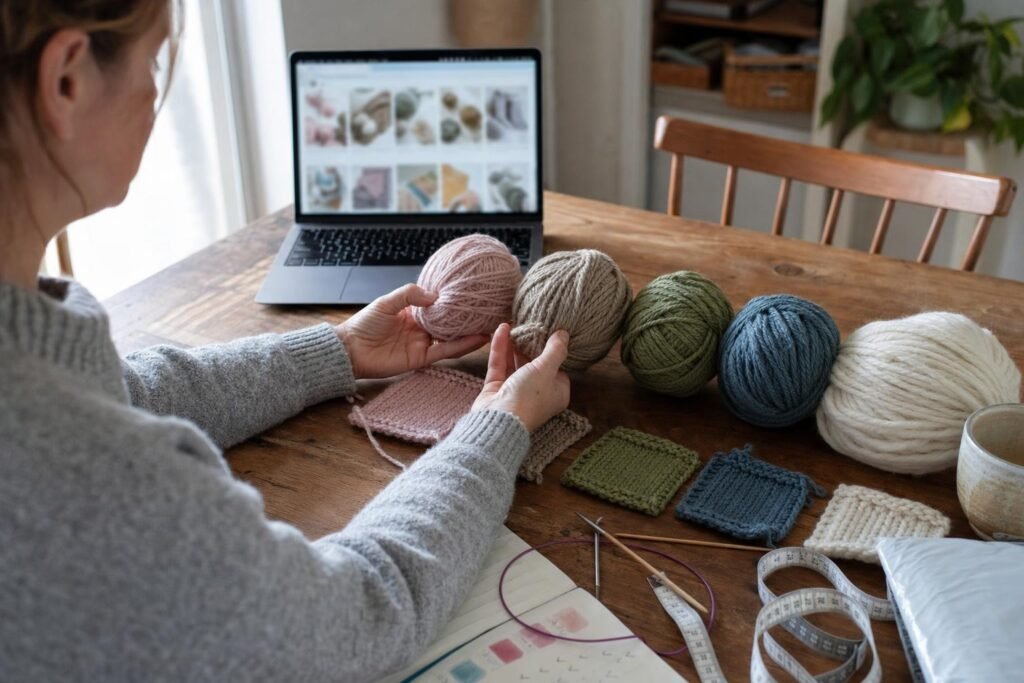
Start with how the finished item will be used. Merino wool suits scarves, beanies, jumpers and baby items because it is soft, warm, and breathable.
Cotton is a good choice for dishcloths, market bags and warm-weather garments because it feels cool and holds up well to washing. Acrylic and acrylic blends are practical for blankets, toys and everyday pieces that need easy care.
Also think about drape. Cotton can feel heavier and less springy than wool, while acrylic can vary from very soft to firm depending on the blend. Reading fibre content before you buy helps avoid surprises when the yarn arrives.
Once a piece is finished, simple extras like embroidered patches can personalise a plain beanie, tote or jumper.
Get the right weight and check gauge
When substituting yarn, match meterage and recommended needle or hook size rather than ply alone. Two 8-ply balls can differ in length, changing how far your yarn goes.
Always knit or crochet a small swatch before starting a fitted item. It confirms your gauge and helps you avoid a finished piece that comes out too small, too large or too stiff.
Colour and dye lots
A dye lot is a batch of yarn dyed together. Two balls of the same shade from different lots can vary enough to show as a stripe or line.
Buy enough for the whole project in one order and check the lot numbers on the labels when it arrives. For larger projects, add a spare ball if your budget allows, since online stock changes and a colour can sell out before you finish.
If you must blend two dye lots, alternate rows or rounds between them. This spreads any slight colour shift so it is less noticeable.
Where to shop yarn online in Australia
Good online yarn stores make comparison easy. Look for clear fibre content, ball weight, meterage, recommended needle or hook size, care instructions and colour information before you add anything to your cart.
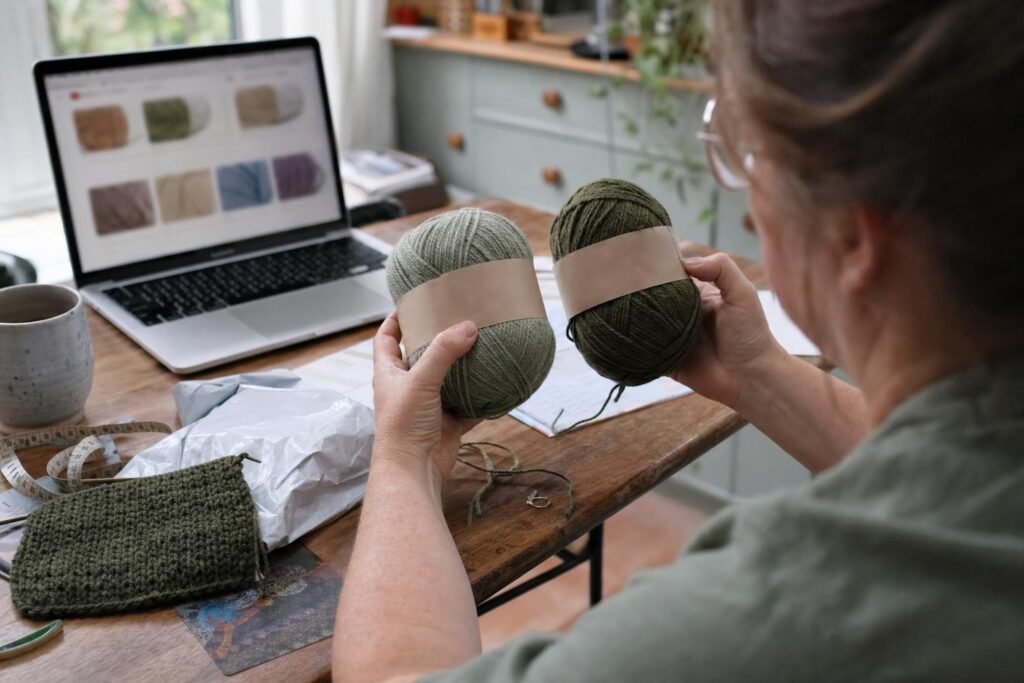
Compare reputable Australian stores such as Bendigo Woollen Mills, Morris and Sons, Skein Sisters, Yarn Trader and The Little Yarn Store. Describe your project first, then browse each site to see which fibres, weights, and colours they stock.
For shoppers who prefer a broad catalogue, you can shop yarns online Australia and compare options by fibre, weight and brand. Its yarn collection groups options such as acrylic yarns, pure wool and wool blends, cotton yarns, specialty yarns, chunky yarn and related tools.
CraftOnline also notes free shipping over $119 for eligible Australian orders on its yarn page. Check the current threshold and delivery estimate at checkout, since shipping offers can change and bulky yarn orders may affect the final cost.
Shipping and delivery expectations
Delivery speed depends on the store location, your address, stock availability and the carrier. If you need yarn for a gift or class, order early rather than relying on the shortest estimate.
Postal prices and courier options can change, so use the store’s delivery calculator before paying. Check whether the quoted time starts from the order date or from dispatch, especially if the yarn is packed from a warehouse or mill.
Returns, refunds, and consumer rights
Read the returns policy before buying, especially for sale yarn, clearance colours and opened packs. It should explain change-of-mind returns, faulty goods, time frames and who pays return postage.
Store policies do not remove your consumer guarantees under the Australian Consumer Law. If yarn arrives damaged, incorrectly described, or materially different from what you ordered, contact the seller and keep a record of your order, photos and messages.
Smart buying tips
- Confirm the recommended needle or hook size on the label.
- Check meterage per ball so you buy enough.
- Read the fibre content and care symbols before purchase.
- Compare price per metre, not just price per ball.
- Consider Australian stores or mills to reduce delivery time.
- Verify dye lots and add a spare ball for big projects.
Frequently asked questions
What does 8-ply equal in international terms?
AU 8-ply usually corresponds to DK or light worsted weight, with typical needles around 3.75 to 4.5 mm. Always confirm meterage on the label, since brands vary.
How do I avoid dye-lot mismatches online?
Buy all the yarn for a project in one order, check the dye lot numbers on the labels and add a spare ball for larger pieces.
Should I buy extra yarn for a project?
Yes, especially for blankets, garments and matching sets. A spare ball can cover gauge changes, joining and colour matching if stock changes later.
What should I check before checkout?
Confirm fibre content, meterage, care instructions, dye lot notes and delivery costs. Save the order confirmation in case you need to ask about returns.
Conversation