
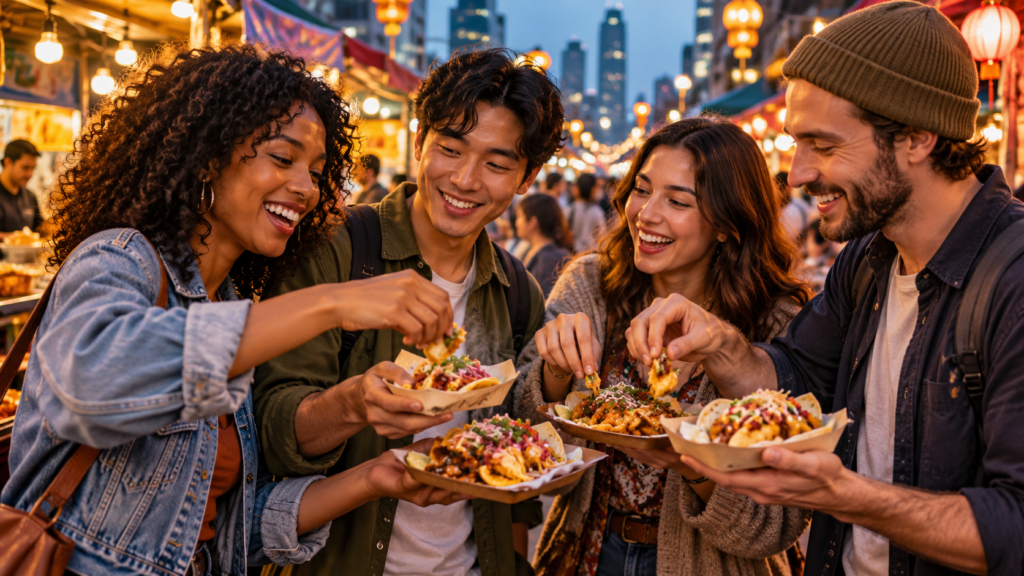
I learned the language of love through food long before I understood what that meant. In my family, affection was measured in portions. Worry expressed itself through packed lunches. Celebration meant tables so full of dishes that you had to stack plates at the edges just to fit everything.
Growing up in New York, surrounded by the rush and noise of urban life, food became my anchor. The bodega on the corner where the man behind the counter knew my order before I spoke. The bakery that smelled like heaven every morning at six. The restaurants where strangers sat elbow to elbow and somehow became less strange by the end of the meal.
Now, decades into my love affair with this city, I find myself thinking constantly about how food connects us. Not just at tables but across distances. Not just in person but through gestures that say what words sometimes cannot. In a world that moves faster every year, the intentional act of sharing food has become more meaningful than ever.
When Distance Demands Sweetness
There was a time when loving someone far away meant letters and phone calls. Now we have a thousand ways to reach across miles, but somehow the old gestures still carry the most weight.
Last year my best friend moved to another city for work. We had spent fifteen years in the same neighborhood, sharing Sunday brunches and late-night takeout runs. Her absence left a specific kind of hole in my weekly rhythm. Texting was fine. Video calls helped. But something was missing.
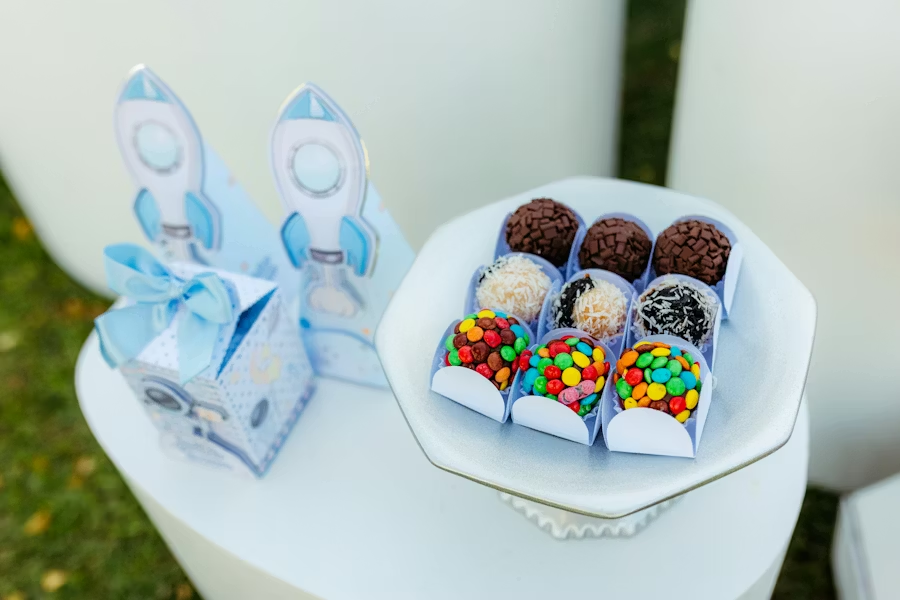
Then her birthday approached and I wanted to do something that felt tangible. Something she could hold in her hands. I started researching options for having chocolates delivered to her new apartment. The process surprised me. What I found was not just convenience but craft. Small makers put real thought into flavor combinations and presentation. The gift that arrived at her door was not generic. It was intentional.
She called me crying. Not because of the chocolates themselves but because of what they represented. Someone had thought about her. Someone had taken time to choose something beautiful and arrange for it to arrive at her door. In a world of instant digital communication, that physical gesture meant everything.
Food as Emotional Language
I think about the psychology of food gifting often. There is something primal about it. Offering someone something to eat is one of the oldest human gestures of care and trust. It says I want to nourish you. I want to bring you pleasure. I am thinking about your wellbeing even when I am not beside you.
In Black and Brown communities, this language runs especially deep. Food is how we show up for each other during hard times. It is how we celebrate victories and mark transitions. When someone in my family has a baby, food arrives before flowers. When someone passes, kitchens fill with casseroles and cakes brought by neighbors who understand that grief requires sustenance.
This tradition of food as care has evolved with modern life but never disappeared. We have simply found new ways to extend it across the distances that urban living often creates.
The Neighborhood Table
Of course, nothing replaces gathering in person. Some of my most treasured memories involve crowded tables in small apartments, everyone talking over each other, plates being passed hand to hand.
I remember a particular Thanksgiving in my late twenties. My apartment was tiny. My kitchen was a joke. But somehow I decided to host dinner for twelve people. We borrowed chairs from neighbors. We set up a folding table in the hallway. The turkey was slightly overcooked and the gravy had lumps.
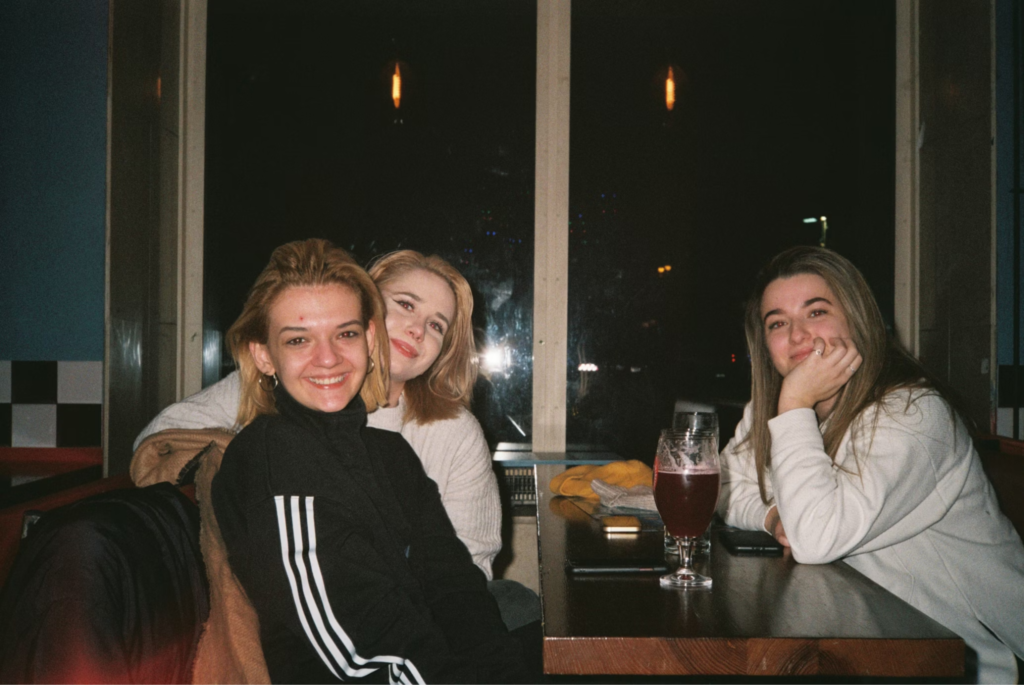
It was perfect. Not because of the food itself but because of what the gathering created. A sense of belonging. A feeling that we had chosen each other as family. The meal became a tradition that lasted seven years until life scattered us to different cities and stages.
Those of us who stayed in New York still talk about Thanksgiving. We remember specific dishes and jokes and the year someone’s date showed up with a whole salmon for reasons no one ever understood. Food creates memories that outlast the meals themselves.
Sweet Discoveries in Unlikely Places
One thing I love about city living is stumbling upon hidden gems. The best food experiences often come unplanned. A door you walk through on a whim. A recommendation from a stranger on the subway. A scent that pulls you off your intended path.
I discovered my favorite bakery this way. I was walking through an unfamiliar neighborhood, killing time before a meeting, when the smell of butter and sugar stopped me in my tracks. The display case was modest but perfect. Each pastry looked like someone had made it with genuine attention. I ordered a croissant and a coffee and sat at a tiny table by the window.
That hour changed my morning ritual. I became a regular. I learned the names of the women who worked there and they learned mine. When I moved to a different part of the city and could no longer visit easily, I was heartbroken until I discovered they offered bakery delivery to my new neighborhood. The croissants arrived still flaky, still perfect. Distance did not have to mean goodbye.
The Evolution of Urban Food Culture
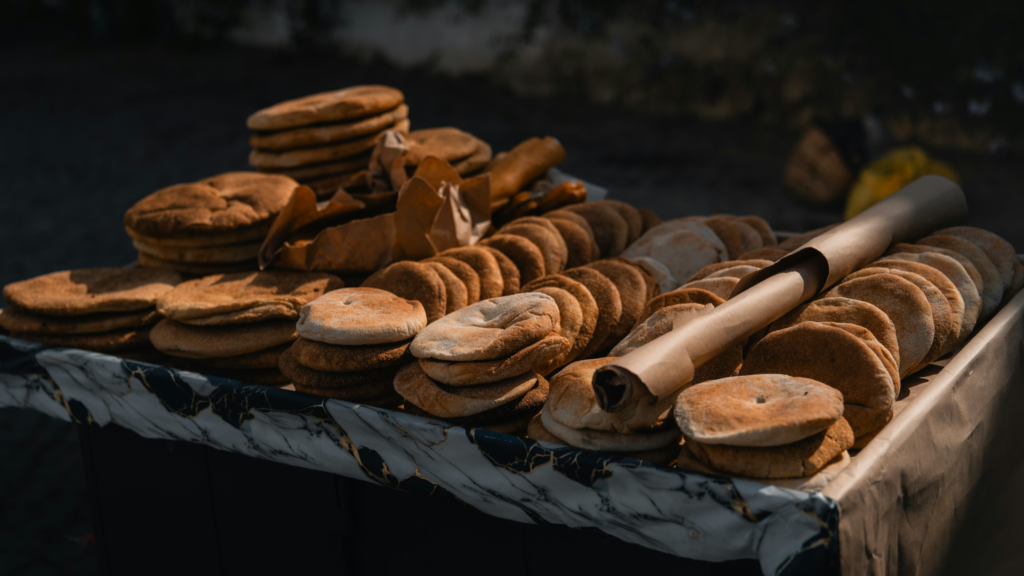
Living in a city means watching food culture shift and change. Trends come and go. Neighborhoods transform. What was once a quiet block becomes a destination. What was trendy becomes passé and sometimes circles back again.
Through all these changes, certain truths remain constant. People want to feel nourished. People want to share experiences. People want food that tells a story, whether that story is about heritage or innovation or simply someone taking the time to do something well.
I have watched the rise of delivery apps with mixed feelings. On one hand, they offer convenience that previous generations could not imagine. On the other hand, something gets lost when every transaction becomes frictionless. The best food experiences still involve some element of intention. Choosing a gift carefully. Seeking out a special place. Making an effort that matches the care you feel.
Building Rituals That Last
As I get older, I find myself more protective of my food rituals. Sunday morning means a specific coffee and a specific pastry. Friday night means cooking something ambitious while music plays. Birthdays mean gathering people around a table, even if the table is small and the people are few.
These rituals are not about the food itself but about what the food creates. Space for connection. Permission to slow down. Reasons to pay attention to the people we love and the moments we share.
In a city that never stops moving, these pauses matter. They are how we stay human. They are how we resist the pressure to treat every meal as fuel and every interaction as a transaction.
What We Pass Along
I think often about what I am teaching the young people in my life about food. Not recipes, though I share those too. But the deeper lessons. That cooking for someone is an act of love. That sharing a meal creates bonds that last. That paying attention to what we eat and how we eat it is a form of self-respect.
My grandmother taught me these things without ever naming them directly. She just lived with them. Every meal she made carried intention. Every gathering she hosted created belonging. I watched and absorbed and now find myself doing the same.
Food is never just food. It is memory and connection and culture and care. It is how we show up for each other across distances and decades, a quiet language of love that words alone cannot carry. It is how we mark the moments that matter and find meaning in the ordinary days between them.
In this city of millions, where loneliness can creep in despite the crowds, food remains our most reliable bridge to each other. Every meal shared is a small rebellion against isolation. Every gift of something delicious is a message that travels further than words.
That is what I have learned from a lifetime of eating and cooking and gathering in this place I call home. The food itself will be forgotten. But the feeling of being fed, in every sense of that word, lasts forever.
Conversation